

shiraz Natural History and Technology Museum
By the About Shiraz team
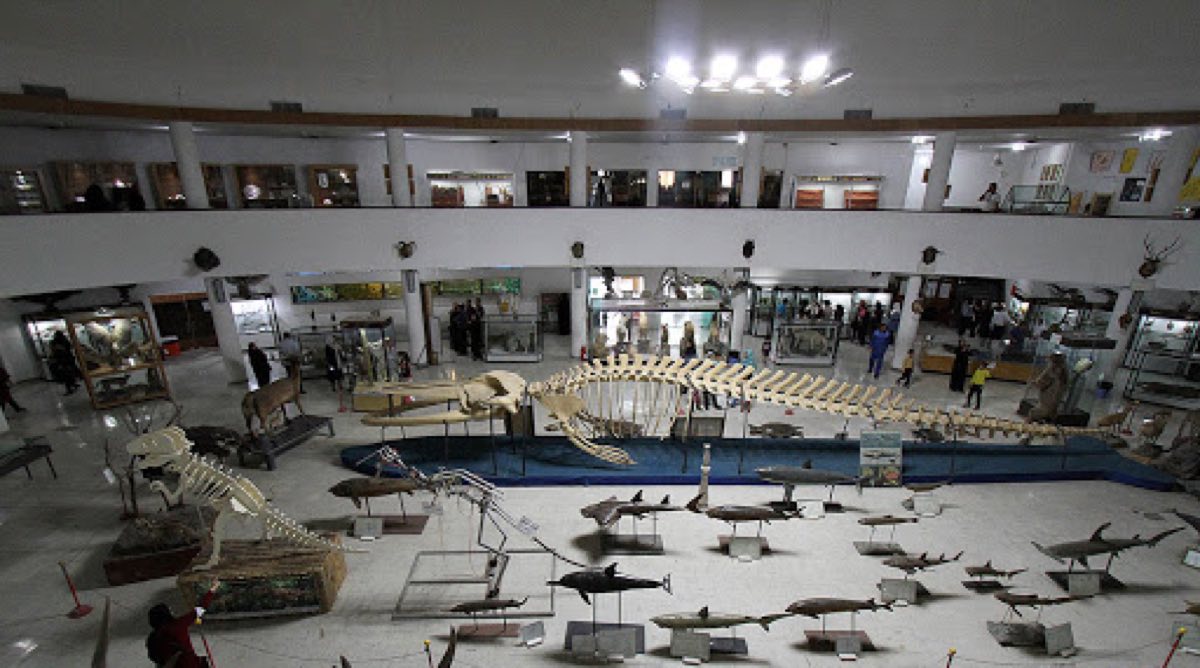
The Museum of Natural History and Technology of Shiraz University was founded in March 1974. The museum's sections include zoology, stamp-coin-anthropology, geology, taxidermy, botanical, technology, anatomy and art. Zoology The museum employs 1055 specimens including creature except the insects in…
- Section
- Culture & History › Culture & history
- Facts checked
- Timeless information; practical details are being re-checked
The Museum of Natural History and Technology of Shiraz University was founded in March 1974.
The museum's sections include zoology, stamp-coin-anthropology, geology, taxidermy, botanical, technology, anatomy and art.
Zoology
The museum employs 1055 specimens including creature except the insects in the two main groups of vertebrates and invertebrates. The two groups are located in two-story central auditorium in the visitor's eye. Interesting examples of animals and aquarium 7 meters of freshwater fish and live snakes are from other parts of this collection. Among the rare examples, the fascinating and spectacular strange clutches, such as the two-headed embryo, stick together from the breast, the two-headed goat Chicken, Chicken, Dipper, Octopus, and Four Horn Sheep can be mentioned. Of the very rare and interesting examples, Siah khan Lepouille's prominent man is 256 cm high, showing a giant disease or human gigantism. Ninety-five percent of the animals on the planet are invertebrates found in most habitats. To be Many of them are found only in seas and live on dry land. It is said that there are between 3 and 15 million species of animal in the world, of which 47,000 species are devoted to vertebrates. Invertebrates is important in most ecosystems. They are highly specialized, diverse and abundant. These types of sponges, corals, worms, moles, arthropods and horseradish can be seen.
Entomology
In terms of diversity, insects are one of the largest animal species in the world, accounting for about 4.5% of them. Most of the activities in this section are carried out in three parts: research, educational and demonstration, most activities in the research field, including the collection and identification of the samples and their detection to the genus and species, and put them in boxes Insect Inspection, Insect Inspection for biologic struggle with pests and their breeding methods, Investigating the fauna of the area and studying the distribution map of different species, collaborating with other academic and academic centers inside and outside the country, exchanging insect samples with other countries, Collaboration with undergraduate, graduate and postgraduate students in the provision of resources And samples and their use are from the collection of insects. Of course, it should be noted that all samples are confirmed by experts from museums and reputable scientific centers outside the country. Also, the research carried out on these samples in the form of a paper or a poster in scientific journals and congresses, both inside and outside the country. being In the dramatic part of the insects and pests of various plants, with the name of the place, collection point, collection history, a brief biology and method of combating them, different training frames are prepared and exposed to public visitation and education. Of course, it is also trying to identify useful insects. It also has a section called collection or repository for insect storage, which samples are placed on the scientific rank and used by students. In general, the purpose of this section is to identify the scientific and taxonomic insects and to study their lifestyles and biology, and in general introduce these creatures to visitors, as well as introduce new species for Fars province and even Iran.
Botanical
The Natural History Museum began its activities in 1979 with a small number of plants. By collecting plants from different regions of the country, especially Fars, this section provided students, students, researchers, plant specialists and other groups of the community with services. . In this regard, by raising the level of scientific and cultural awareness of the people, the motivation to protect the environment also increased. The plant's section of the museum has different parts, including plants in the Quran. Plants mentioned in the Quran with related verses contain more than 80 plant specimens that have been tried to demonstrate their medicinal properties in order to raise the level of awareness of the people and to show one of the important aspects of the plants effective steps to be taken.
Anatomy
The Museum of Anatomy, with a specialist view and taking effective steps to improve the educational and research aspects of its goals, has collected a collection of skeletal and anatomical examples. One of the most valuable examples of this collection is the reconstructed skeletons of honeybee whales and embryonic samples stained with alizarin technique, which serves the best training of students in natural sciences, especially medical and veterinary sciences. The valuable features of this museum are its ability to implement plans for advanced education in the field of anatomy and the presentation of solutions and the production of valuable examples in this direction. In order to enhance the educational aspects of this museum, various multifunctional organs that are members of the human body and the senses of the five It is presented and the coach can easily explain different parts of the body separately for the student and student. The set of pulses of the stages of human embryo development from one month to nine months and twin fetuses and also how The relationship of the fetus with the pairs and the mother's body, from informative and very interesting parts This is the collection.
geologyc
The geological section consists of specimens of rocks, minerals, fossils, sedimentary and igneous structures such as Concreations, Ripple Mark, Nodul, Pylowava, ..., Tectonic Maket Types of Types of China (Normal-Laid-Dipped) and Faults (Normal- Reverse-Composite-Driven) and educational boards. Each of these categories is classified according to the classifications in the geological museums of other parts of the world and are placed in special wicks. This section is very useful for all levels of education, including high school and high schools, and even students, and can be used as a powerful educational aid tool. Various groups of minerals include elements, sulfides and sulfates, salts, silicates, non-silicates, and ... the richest part. Classification of minerals is also based on their current classification, ie silicates and non-silicates. An exclusive collection of precious and semi-precious minerals such as red ruby, emerald, acaite, topaz, enchanting quartz, amethyst, etc., which have been collected and purchased from all over Iran, have been exhibited in a separate showcase and have a special appeal to This section is given. The complex of intrinsic and outer igneous rocks (acidic to super-playing), Azaravari, metamorphic (metropolitan and adjacent) and sedimentary (clastic and chemical), each with various varieties that have been collected through numerous field operations from all over Iran, from other There are interesting sections of the museum and some of these specimens can be classified as the most ideal stones. Animal fossils (invertebrates) are divided into different geological periods and are classified into five groups of sponges, brachiopods, clams, arthropods and thistles. Each of these branches has a category, Subclasses and various orders, all of which are based on scientific and systematic classifications in vitrines’. In addition, vertebrates have unique examples of fish fossils (Cordata branches) with the Eocene age, along with replica dinosaur footprints. The Alborz and Central Iran (upper Triassic - Middle Jurassic) fossils in this section are related to three large ferns, benthos and Nilssonites and collected from Shemshak Formation in different parts of the north of the country.
Anthropology
Among the departments in the Museum of Natural History is the Museum of Anthropology. There are some research papers in this field or in the final stages that are: the preparation and translation of the description of the nomadic section items, the study of the place of the Museum of Anthropology in the Museum of Natural History, the categories of guide in the Museum of Anthropology and Characteristics Special for life. The purpose of the launch of the Anthropological Museum is to bring a socio-biological, human-minded mentality to visitors from the museum, according to scientific research. In this regard, the goals and objectives that are prioritized. Include: 1- The evolution of human beings, especially from the beginning of predation to life in modern cities. 2- Displaying livelihood tools of various types of life, such as predator life, livestock farming, agriculture and urban. 3- Demonstrate the diversity of the human race with the help of photographs, sculptures and provide information and explanations on this subject. 4. To refer to a variety of human activities in a variety of cultures, with the help of photographs or replicas, to address all of these goals in order to attract public attention to the interpretations that could be more easily addressed by more strata of the public along with the aspects of the museum's presentation. And in fact contribute to the generalization of the knowledge of anthropology
Coins and Stamp
It has been publicly used since early 2003, with examples of stamps from various countries of the world, including ex-Russia, Hungary, the Democratic Republic of Guinea, Nagaland, North Korea and several other countries. Most stamps Related to Iran before and after the Islamic Revolution. In this section, we try to be at the right opportunity and on the pretext of meeting a relatively attractive atmosphere about the history of the news, the generalization of postal, state or popularity of the initial steps of the post, the reason for using the stamp in another post, which is part of the general knowledge Comes with explanations for museum visitors, especially children and young people.
Science and Technology Museums
Science and Technology Museums are a subset of the complex of Museum of Natural History and Technology of the University of Shiraz. In this collection human and scientific achievements in various branches of technology, phenomenological physics, astronomy, and teleology, telecommunications, electronics, computers, electricity And new energy has been explored and exhibited. The Museum of Technology in this museum has collected tools and systems designed to simplify or speed up the work of human beings, and the development and development of tools and tools Human beings in different groups of light The computer, sensing, communications, audio and video, computing landscape has been screened. Sample collection of departments and organizations of the province and scientific identification, providing identification cards and scientific texts, explanations for each sample and group, and providing the honey is one of the most important things done in this section. The research project of the Museum of Electrical Engineering of this museum is one of the ways of Peugeot Hashemi is a joint university and industry, which is being implemented by the Natural History and Technology Museum, Fars Regional Electricity Engineering and Entrepreneurship Corporation. The purpose of this project is to promote the general knowledge of society about the process of production, transmission, distribution and consumption of electrical energy and energy crisis in order to optimize the use of electrical energy.
The research project of the Museum of Electronics, Telecommunication and Other Research Projects, the establishment of a research and educational center for electronics, telecommunications and the Museum of Natural History and Technology. In the electronic and electronic industries, electronic information and electronic information and their location in the nutrition of other industries and their role in the development of science and industry are discussed. In the telecommunications sector, the study of the science and technology of telecommunications and the introduction of techniques and scientific foundations of this branch of the industry is considered. In addition to scientific studies on the above issues, the trend of development and integration of telecommunications industries from the beginning to the present day is examined. Equipment supplied by the contractors to the museum is transferred to the museum and is subject to demonstration after the identification of the scientific and educational texts and identification cards. The research project of the Air and Space Museum is in line with the University's relationship with industry, the Museum of Air and Space, in cooperation with the Museum of Natural History and Technology, the Faculty of Engineering, Aircraft Organization and the Air Force of the Islamic Republic of Iran. The purpose of this project is to study the development and development of the aerospace industry and the scientific and technical surveys of the space industry. In this regard, a number of different parts of the airplane and the aircraft have been provided, hunting, fighter and transport.
The transfer of two Boeing 727 and 723 aircraft is underway. The research project of the Museum of Astronomy and Astrology of the Museum of Astronomy introduces the history of this ancient science, beliefs and beliefs and the statement of the scientific foundations of astronomy, and a chain of astronomy's past to the touch of the moon and the advancements of human knowledge around the rules governing the universe And the charm of the sky and the expanse of space. In 2003, following the construction of one of the other wings of the museum's building, the design of the astronomy museum began in two phases. The research and executive activities carried out in the first phase include the following: commissioning of a 4-meter dome planarium, designing educational posters using the latest Hubble telescope images, collecting Persian and Latin astronomy books and scripts, providing software Astronomy, the establishment of an audiovisual center for astronomy, etc. Given the widespread astronomical and astronomical issues and limited time, the continuation of the studies and research projects that are contemplated will be implemented in the second phase. Design Research of the Museum of Phenomenology of Physics in this section tries to transform what is unconscious and unknown to people. Viewing and experiments is attractive and simple. So that each visitor with each level of education can acquire and understand them.
Address: Fars, Shiraz, Madras Blvd, Azadegan Avenue
More in Culture & history
A Brief Summary
There was likely a sizable settlement on the site of Shiraz in the ancient time frame and cuneiform records from the incredible…
Abbas Doran
Education Abbas Doran attended the Undergraduate Pilot Training Program at Columbus Air Force Base. He graduated in the autumn of 1972 as…
Abish Khatun
She was born in Shiraz around 1259/1260 to Salghurid Atabeg Sa'd II and Turkan Khatun - daughter of Mahmudshah, Atabeg of Yazd.…
After Islam
After the Arab invasion of Iran and the decay of the Estakhr city the importance of the Estakhr city was transferred to…