

Imamzadehye Ali Ebne Hamze
By the About Shiraz team
Imamzadeh-ye Ali Ebn-e Hamze Biography : Imam Ali ibn Hamza of the descendants of the seventh Imam Shihis and the nephew of Hazrat Shah Cheragh was born in 1909, in the year 770 AD, in the city of Medina, Saudi…
- Section
- Travel › Sights
- Facts checked
- Timeless information; practical details are being re-checked
Biography :
Imam Ali ibn Hamza of the descendants of the seventh Imam Shihis and the nephew of Hazrat Shah Cheragh was born in 1909, in the year 770 AD, in the city of Medina, Saudi Arabia.
Ali ibn Hamzah fled to Shiraz in the year 220 AH, coincided with 800 AD due to the pressure of the Abbasid Caliphs from Medina. She hid in Shiraz and hid in a cave, which later became a Babakouhi for his dignity. He provided firewood for days and occasionally brought the pool to the gates and sold the cave for sale to the family.
He was killed in a clash with Moran in 23 Muharram, 220 AD (800 AD). After his head was crippled and sent to the Caliph, his body was buried in the same place (near the bridge of the present day Isfahan).
Architecture of Ali ibn Hamza shrine:
The shrine of Imamzadeh Hamzeh has been registered in terms of gypsum, masonry, door, chairs, arches and arches in the 305th row.
The present building of Emamzadeh is a circular dome with an approximate height of 16 meters and its circular arc style is similar to the Qasr-e-Lar market. Around the fuselage of the vault, at certain intervals, small inscriptions are placed on the decorative Kofi line. Three Shahstani is located in the north, south and east directions, and the entrance door opens to the west.
The Imam Zadeh area is a relatively large area of old trees, suggesting that at least seven hundred years ago, Imam Zadeh has been attended by people.
The entrance door of Imam Zadeh's courtyard is located on the west side, where the head is dug and only a small part of its gypsum remains. This gypsum is one of the most valuable artworks of the tenth century AH.
At the entrance of the shrine, Shir Mir Ali ibn Hamzeh, though it is old and worn out, it is a typical example of the taste and art of the people of Shiraz. After passing through the atrium in a place where the entrance to the courtyard, on the top of the port, a red stone is installed, with a beautiful inscription on the line of Abraham Soltan, son of Shahrokh Teimouri.
The strange proportions of the Slavic landscapes with vivid and vivid scenes and the scenes of the dispute between lions and deer indicate the artist's bodybuilding and have been a fanciful expression of the emotions and spiritual appearances of the people on the shores of the desert.
On the right hand side of the entrance, a poem written on a piece of stone written in accordance with the order of Mirza Mohammad Hassan Vazir and its date is equivalent to the total letters of the alphabet (Ghafmdalla) is the ghost of the year 1074.
The door of Imam Zadeh is also ancient and in the upper part of it the verse of the Quran is embroidered. The area where the entrance door ends and is separated by another part of the shrine is a vault with geometric shapes and very beautiful gluing of its ceiling, and part of it remains hidden under subsequent chipping.
The right side of the door is made of two lamellas, a room that has remained in the Safavid era, and has been done around the top of its framework with the third line of beauty of the names of twelve Imams.
Wooden wood is made of three ways of drawing to the outstanding works, which was ordered by Shah Abbas Safavi (1038-994(
Address : Hafez Avenue along the Ali ibn Hamza bridge, Shiraz, Fars province,Iran
More in Sights
Afif-Abad Garden ●
A royal mansion within a lovely botanic garden
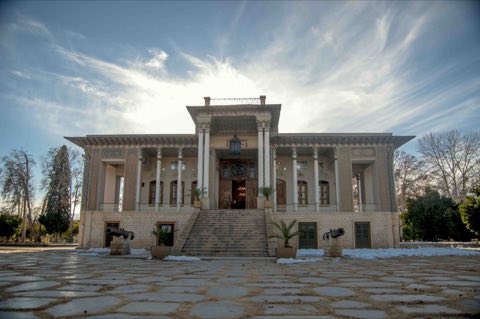
Afifabad Military Museum
Afifabad Garden and Museum is one of the historical centers of Fars province, built during the reign of Nasreddin Shah at the…
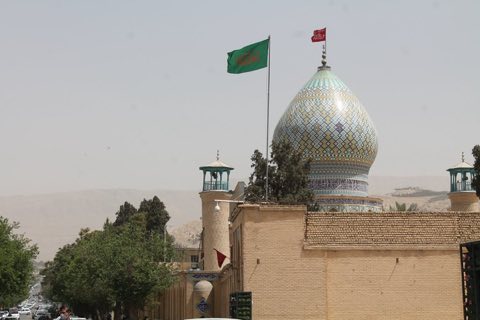
Ali Ibn Hamzeh Tomb
Ali Ibn Hamzeh Shrine is one of the famous mosques in Shiraz, which is located south of Quran Gate, next to Ali…
Arge karim khan e zand
The Arg of Karim Khan or Karim Khani Citadel is located in the northern part of Shiraz. The Arg of Karim Khan…