

Pasargadae
The final resting Place of Cyrus the Great
By the About Shiraz team · First published 2022-01-18
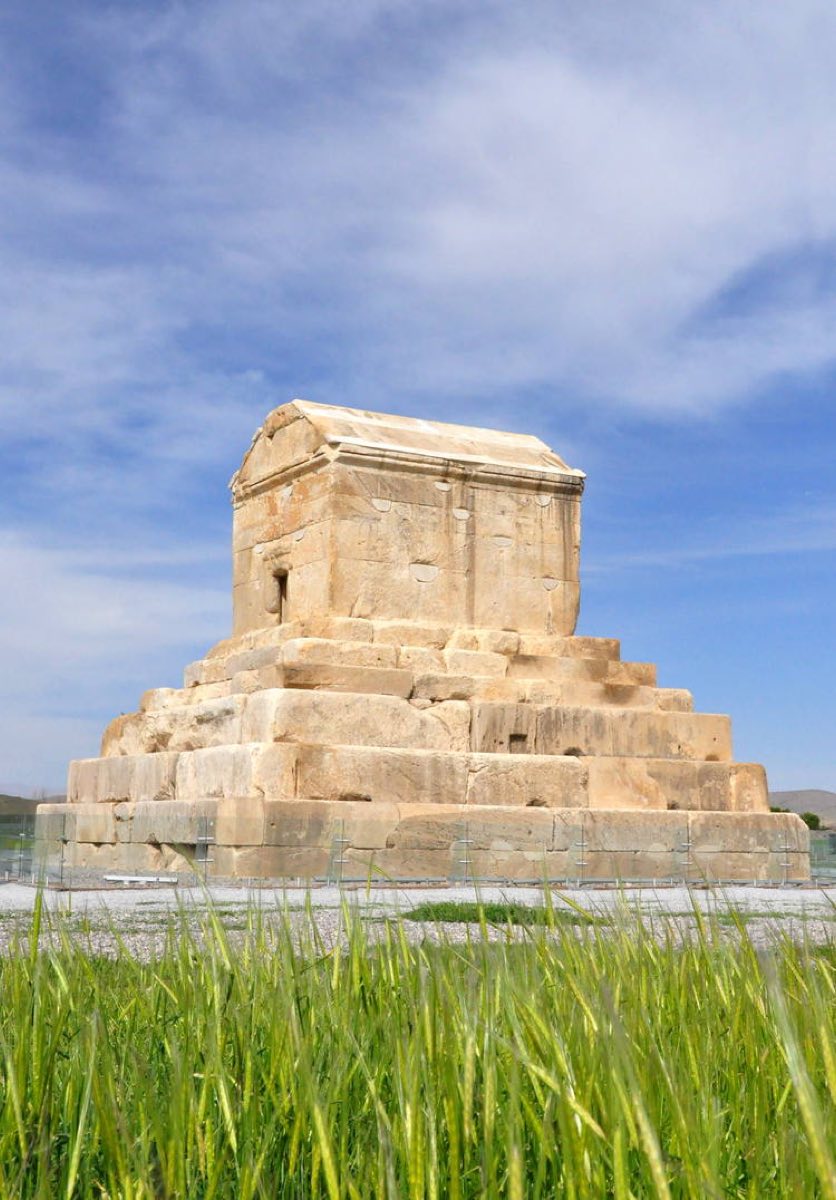
Pasargad is the first capital of the Archaedian Empire and the final resting place of Cyrus the Great. It's a 25-century-old tomb, an 11-meter-high stone building with large white boulders with six rows of stairs and a small gable structure that has turned it into a seven-story building. Undoubtedly, one of the most prominent historical attractions in Fars province is the tomb of Cyrus the Great.
- Section
- Travel › Sights
- Facts checked
- Timeless information; practical details are being re-checked
Have you ever heard anything about the Achaemenid empire? Containing Anatolia, Egypt, western & central Asia, and northern India, the Persian territory was the broadest that the ancient world had seen, surpassing the Aegean sea eastward to the Indus river. Cyrus the great, widely praised for his tolerance, mercy and benevolence, founded the Achaemenian Empire in Persia. While being a competent military strategist, Cyrus considered himself a liberator. He triumphed through conquests and showed great forbearance and mercy to his enemies. Cyrus's decrees on Human rights (Cyrus Cylinder), dating from the 6th century BC, were inscribed in the Akkadian language on a baked-clay cylinder and is currently preserved in the British Museum. Cyrus ruled a multicultural society and established racial equality. He let all the individuals adhere to their religions and beliefs regardless of their race or ethnicity. He freed the enslaved people, publicized that all people had the right to choose their religion. “Success should always call for showing greater kindness, generosity, and justice; only people lost in the darkness treat it as an occasion for greater greed.” ― Cyrus the Great
About Cyrus the great
Between 590 and 580 BCE, Cyrus was born in the modern Fars province of Iran. Being the son of Mandana and Cambyses I, Cyrus was the grandson of Median King, Ishtovigo. The Greek historian Herodotus had told a legend about Cyrus's early life, which has become widely popular in Iranian folk beliefs. One night Ishtovigo had a horrible nightmare. He dreamed that a tree was growing out of his daughter's womb to become an extremely towering one and casting a shadow all over the world. It was precisely when Mandana was pregnant over Cyrus. When he told his mysterious nightmare to interpreters and sorceresses, they decoded it as Cyrus would one day overpower Ishtovigo and beat his empire. Eventually, when Cyrus was born, Ishtovigo commanded that the baby Cyrus be departed from his mother and killed. Harpag, one of the courtiers of Ishtovigo who was compelled to kill Cyrus, decided to leave him in the remote mountains out of sympathy secretly. Cyrus was found by some shepherd who rescued and raised him. When he turned fifteen, King Ishtovigo heard of the child and realized that the boy had not died. He considered it an act of God and permitted Cyrus to return home to his birth parents. This legend has been passed through Iranian generations and has become a source of inspiration in Persian literature and art.
Photo by: Alireza Naderifard
About Pasargadae
Pasargad is the first capital of the Archaedian Empire and the final resting place of Cyrus the Great. His tomb, Pasargadae, is an 11-meter-high stone building with large white boulders with six rows of stairs and a small gable structure that has turned it into a seven-story building. It's a 25-century-old tomb where no mortar was used between the stones, and the stones were connected with metal fasteners. The seventh floor of the tomb is called the treasury. It is said that it holds the golden coffin of Cyrus the Great, containing the king's mummified body and many jewels. Among the historical structures of this place, there is Pasargad Mosque, Pasargad Royal Garden, Gate Palace, General Bar Palace, Private Palace, Two Pavilions, Cambyses Tomb, Muzaffari Caravanserai, and the fountains of the Royal Garden. According to Herodotus, after many conquests in 526 BC, Cyrus invaded the Scythian tribes in Central Asia. Unfortunately, he was killed in battle with the Masaghets (an Iranian tribe and a semi-nomadic Scythian tribe in Central Asia) in Pasargadae.
Photo by: Alireza Naderifard
Wrapping things up
The ancient complex of Pasargadae is a relic of the glorious Achaemenid Empire and is located in Fars province. Undoubtedly, one of the most prominent historical attraction in Fars province is the tomb of Cyrus the Great. Interestingly enough, this archeological treasure was designed by Cyrus. Pasargadae was registered as the fifth Iranian site in the UNESCO World Heritage List in July 2004.
More in Sights
Afif-Abad Garden ●
A royal mansion within a lovely botanic garden
Afifabad Military Museum
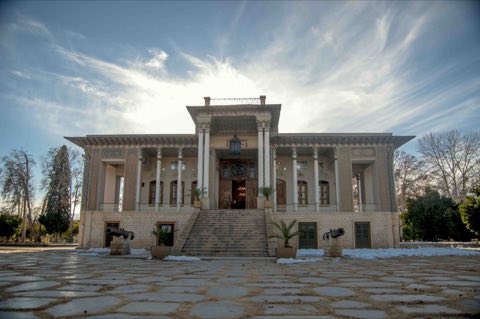
Afifabad Garden and Museum is one of the historical centers of Fars province, built during the reign of Nasreddin Shah at the…
Ali Ibn Hamzeh Tomb
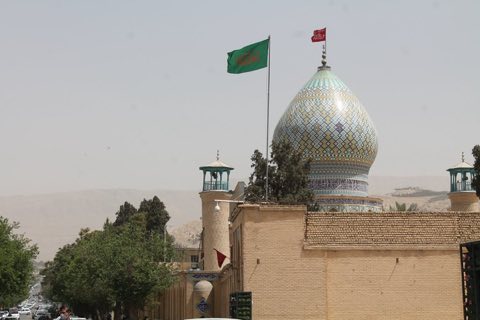
Ali Ibn Hamzeh Shrine is one of the famous mosques in Shiraz, which is located south of Quran Gate, next to Ali…
Arge karim khan e zand
The Arg of Karim Khan or Karim Khani Citadel is located in the northern part of Shiraz. The Arg of Karim Khan…